Updated
An older house can contain plumbing from several renovation periods. The original construction date does not tell you the age or condition of every pipe. Start with the actual symptoms and what can be inspected.
Need help with your property? Book routine service.
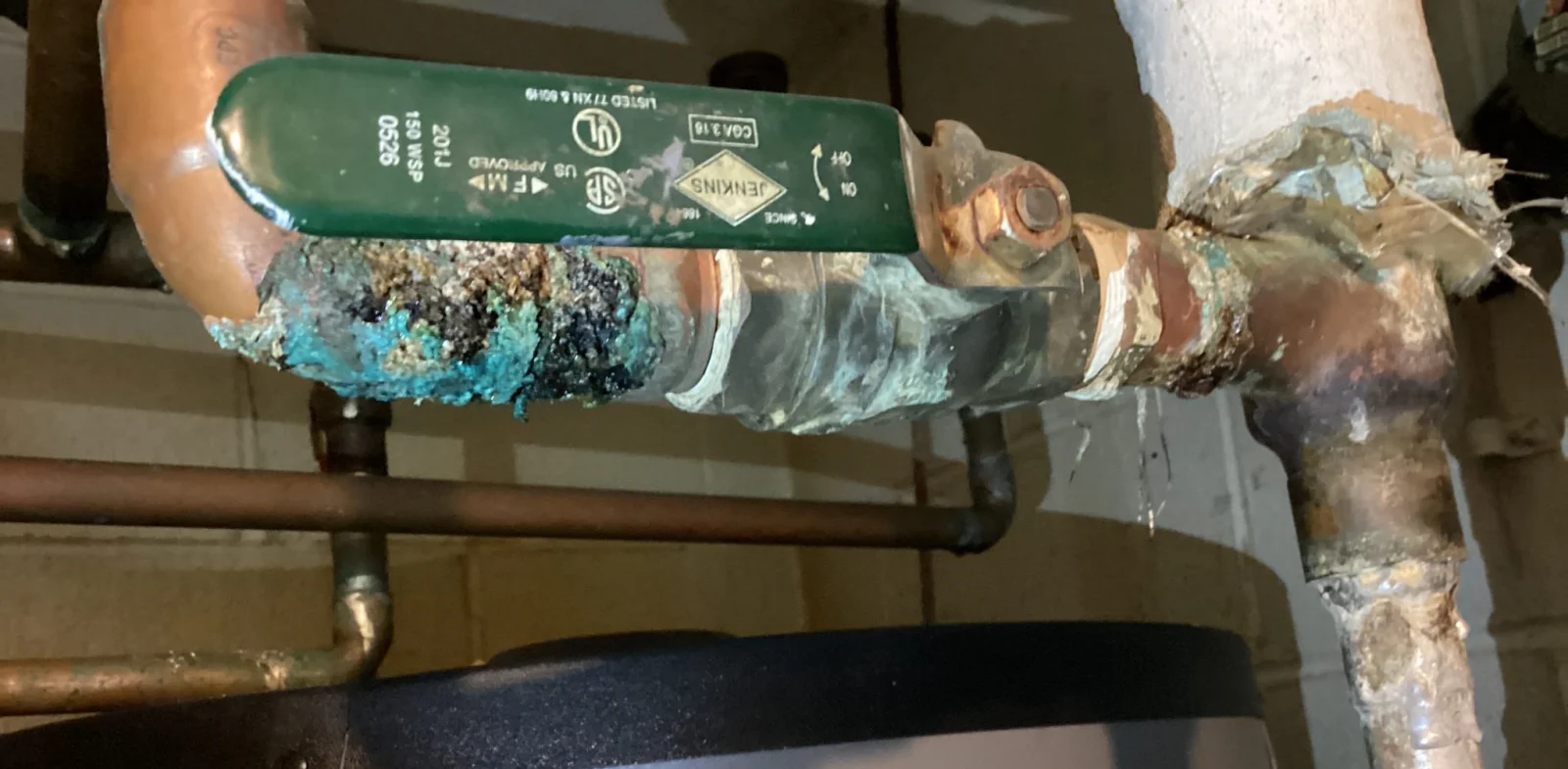
Expect a mixed history
Previous repairs may have changed one bathroom or section of piping while leaving the rest in place. Gather old invoices, renovation photos and inspection records if available. They can help explain where later work connects to older systems.
Report observable changes
Describe recurring leaks, staining, unreliable shutoffs, drainage problems or a change in flow. Avoid deciding that the whole house needs replacement based only on age or the appearance of one fitting. The affected area needs assessment.
Include access in the repair plan
Finished basements, tight cupboards and old additions can complicate access. Ask what must be opened and who restores it. Do not disturb unidentified insulation or other suspect building materials to expose piping; discuss access requirements before work starts.
Use renovation opportunities carefully
When an area is already open, ask whether nearby connections or shutoffs merit attention. Separate necessary repairs from optional improvements so the scope stays understandable.
- What fault has been confirmed?
- What remains concealed or uncertain?
- Can work be grouped while access is available?
- Which improvements can be planned for later?
Keep a better record for the next visit
Save photos of completed accessible work, invoices and equipment details. A clear record helps future decisions without assuming that everything behind the wall is original.
Build a history of the areas being repaired
Start with the room or pipe section connected to the symptom. List renovations you know about, accessible materials, equipment replaced and any previous leak or drainage work. Mark information from an old invoice as a record and information from a previous owner as something still to be confirmed. Both can be useful when their limits are clear.
A house may contain several plumbing generations after kitchens, bathrooms and additions have been altered. Do not assume one visible fitting represents the whole building. Provide photographs of accessible junctions without disturbing insulation or finishes. Ask which parts of the history matter for the proposed repair and what should be documented while safe access is available.
Keep water-quality concerns distinct from a repair diagnosis
Older plumbing can raise questions about materials as well as operation. Government of New Brunswick: lead in drinking water explains that lead can enter water from plumbing components and cannot be identified by appearance, taste or smell. A dry pipe or clear glass of water is not a water-quality test. Ask about appropriate sampling when there is a concern and follow the laboratory's directions.
Do not conclude that every old pipe contains lead or that one fixture replacement resolves every possible source. Keep any test result with its sampling context and obtain advice about the next step from the responsible water-quality professional or authority. A plumbing repair and a water-quality investigation may inform one another, but they are not interchangeable services.
Plan access before agreeing to a larger scope
Show where finishes, cabinetry or later additions restrict the repair. Ask which openings are needed, who makes them and who restores them. Do not remove unidentified insulation or other suspect materials to speed up the visit. If specialist assessment is needed before opening an area, have that dependency recorded rather than treating it as ordinary plumbing access.
Canadian Home Builders’ Association: the renovation process notes that renovation work can uncover conditions that were not reasonably visible beforehand. Ask how those findings will be documented and approved. A controlled process can explain why the scope changed without allowing an open-ended instruction to replace everything nearby.
Choose a phased plan based on condition and opportunity
Separate the current confirmed repair, an investigation needed to understand the system and optional improvements that would be convenient while an area is open. Discuss the consequence of deferring each item and whether later work would require reopening the same finishes. These questions support a phased decision without assuming all old plumbing has reached the same condition.
At completion, keep photographs of the accessible finished work, the exact area repaired and remaining recommendations. Update a simple floor plan or room list if it helps locate the work later. A new owner or technician should be able to tell what was changed and what was not assessed. Better records reduce uncertainty over time; they do not provide a guarantee about concealed sections that have never been inspected.
References
- Government of New Brunswick: lead in drinking water
- Canadian Home Builders’ Association: the renovation process
Your next step
Book routine service or call 506.696.7000. For planned installation work, request an estimate.
Related services
Pipes · Leak Detection · Plumbing System Inspections